

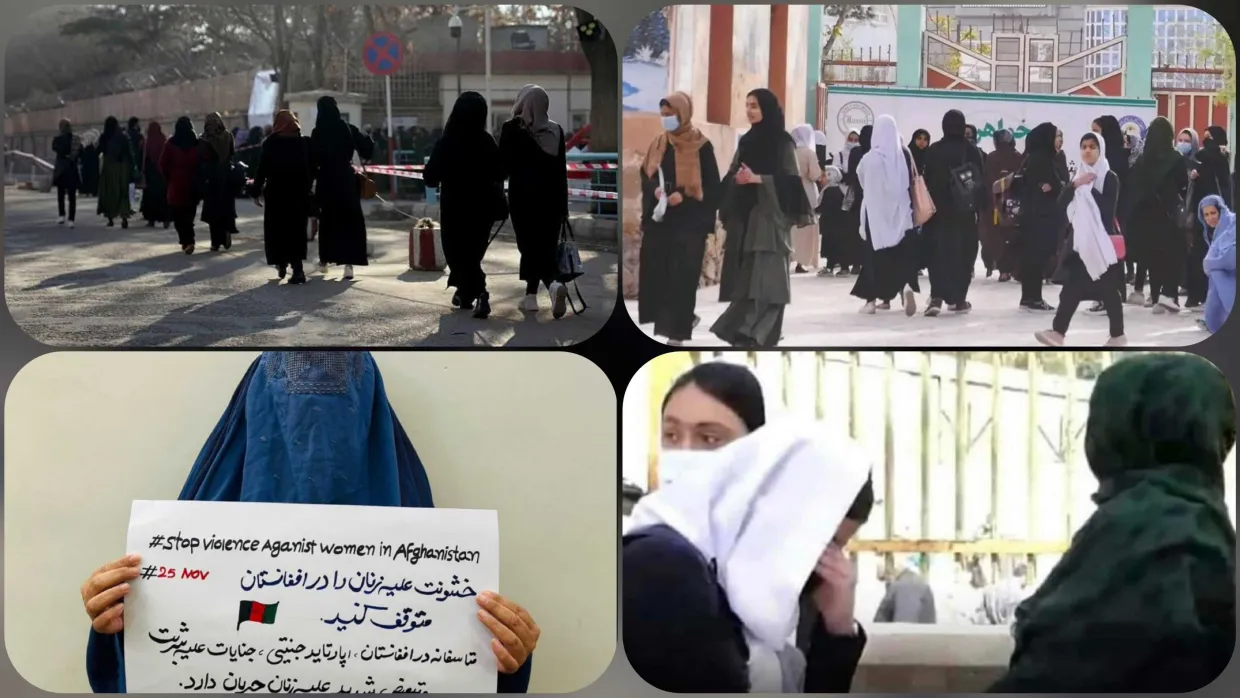
KABUL: The United Nations has stated that the deprivation of women and girls from education in Afghanistan is a significant loss not only for them but for the entire society. Georgette Gagnon, the UN Humanitarian Coordinator for Afghanistan, warned that the lack of access to education for women hinders societal growth and sustainable development. Meanwhile, Stéphane Dujarric, spokesperson for the UN Secretary-General, noted that over 23 million people in Afghanistan require urgent assistance, but the necessary resources to address this crisis have yet to be secured. He added that the large-scale return of migrants from Iran and Pakistan, along with continued drought, is putting additional pressure on limited domestic resources. In European countries, Afghan migrants have also condemned the Taliban’s policies through gatherings. In Madrid, a group of migrants, journalists, and civil activists labeled the current state of the country as “oppressive,” describing Taliban actions as “genocidal” and indicative of “gender apartheid.” They called for immediate action from the international community and support for Afghan migrants. In the Netherlands, hundreds of civil activists and women’s rights defenders gathered in Dam Square in Amsterdam, expressing solidarity with Afghan women with the slogan “Do not recognize the Taliban.” Speakers at the event referred to Afghan women as “heroes and brave” and emphasized the continued struggle for freedom and equality. Thus, both within the UN and outside of Afghanistan, voices protesting against the Taliban’s policies and the deprivation of women’s fundamental rights are becoming increasingly heard.
