


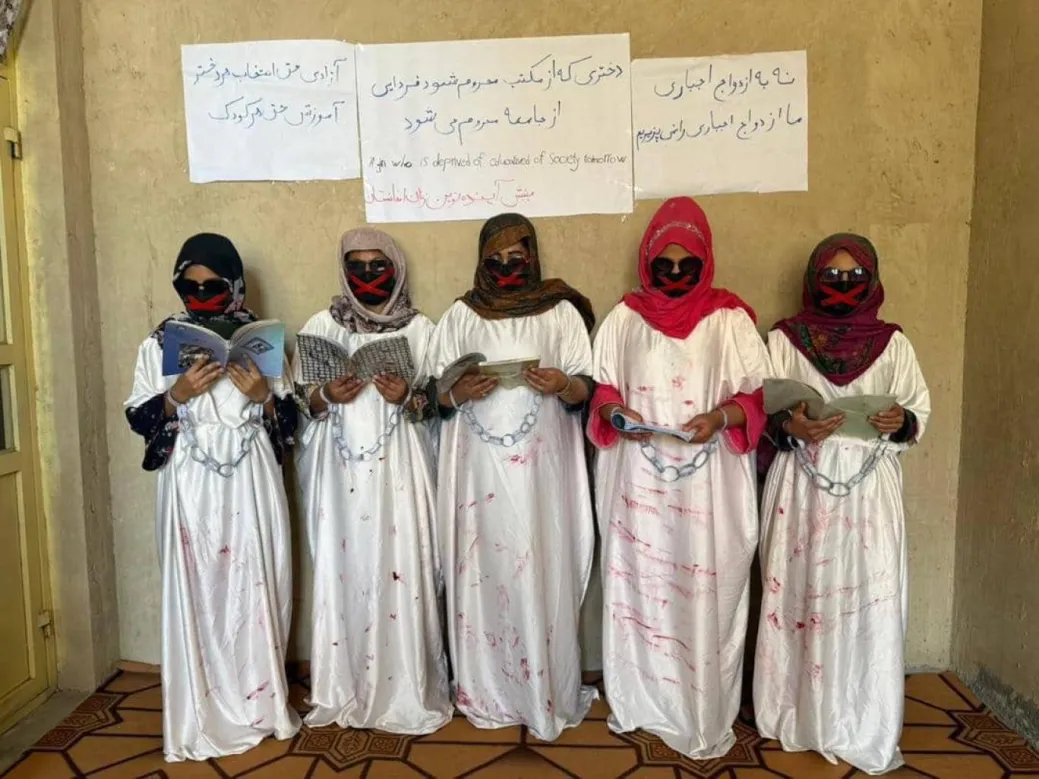
Nearly five years after the Taliban returned to power, women and girls in Afghanistan continue to express opposition to the group’s policies through various means, despite widespread threats, detentions, and restrictions. The Taliban have banned all protest gatherings and marches. However, women activists have kept their dissent alive by adopting new and symbolic methods of protest. In the most recent action, five women who are members of the “New Future Movement of Afghan Women” wore white shrouds smeared with red paint, had chains on their hands, and tape over their mouths to protest against restrictions and the violation of women’s rights. In a statement, these women described the situation for women and girls in Afghanistan as “catastrophic” and warned against a new Taliban directive concerning the separation of married couples. They believe this regulation paves the way for child marriage and violates children’s rights. The said directive has been endorsed by the Taliban’s leader, Mullah Hibatullah Akhundzada. The protesters stressed that silence in the face of such policies would normalize discrimination and injustice. In recent years, in addition to street protests, women have used wall-writing, civil campaigns, and social media to convey their message. Following increased pressure and the arrest of protesters by the Taliban, many of these activities have continued in secret. In another symbolic act, members of the “Afghan Women’s Political Participation Network” staged a protest performance on World Press Freedom Day, depicting censorship and restrictions imposed on media in Afghanistan. Despite a lack of broad domestic support and continued security pressure, the women protesters say they will continue their civil struggle. Using media and social networks, they have attempted to keep the women’s protest movement in Afghanistan alive.
