
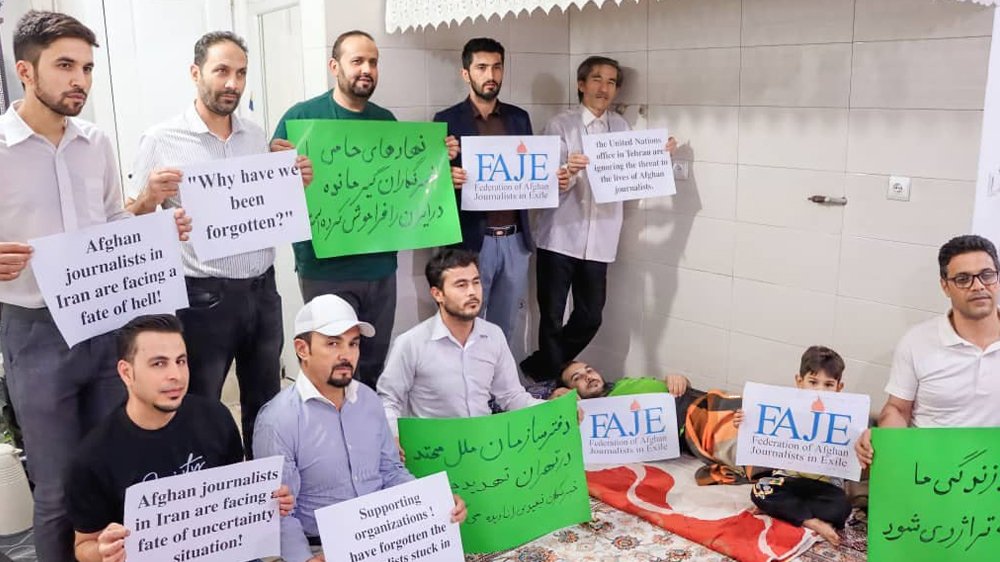
Since, the fall of the Islamic Republic of Afghanistan and the return of the Taliban, hundreds of Afghan journalists who have spent years advocating for freedom of expression and exposing war crimes are now trapped in legal limbo in Iran and Pakistan. They face the threat of forced repatriation, ongoing psychological pressure, and security threats—a situation that has become a silent humanitarian and media crisis, overshadowed by the indifference of the international community. Contrary to the narrative of “successful migration” portrayed in Western media, the reality across the borders includes irregular detentions, visa suspensions, reduced institutional support, and systematic discrimination. Many find themselves in an “eternal wait”—unable to return or stay. Over 150 journalists and their families are in limbo in Iran and Pakistan; some have been waiting for over 48 months for responses regarding their asylum or humanitarian visa applications. The processing of these cases has severely slowed in the past 18 months. Nicolas Ich, a representative of the National Union of Journalists in France, states, “225 journalists and their families have been transferred to France, but the recent process has nearly come to a halt.” The situation is worse for female journalists. Maryam Razaei says, “I am not just a number; I am an exiled woman living without a visa and legal rights.” Many have been forced to engage in non-professional and dangerous work, while still under the threat of the Taliban. Reports indicate that some journalists in Pakistan have been detained and forcibly returned to Afghanistan; some are imprisoned by the Taliban, while others remain hidden in silence.Alireza Sarvari in Tehran mentions, “The Taliban are re-examining our old files, and anything can become a crime.” Reza Akbari, an experienced journalist, adds, “Individuals without media backgrounds have been evacuated while real journalists have been lost in the waiting lists.” Hamid Abidi, head of AMSO, warns, “Afghan journalists have been waiting four years for humanitarian visas; do not forget that they are primary citizens of human rights.”
- Advertisment -