


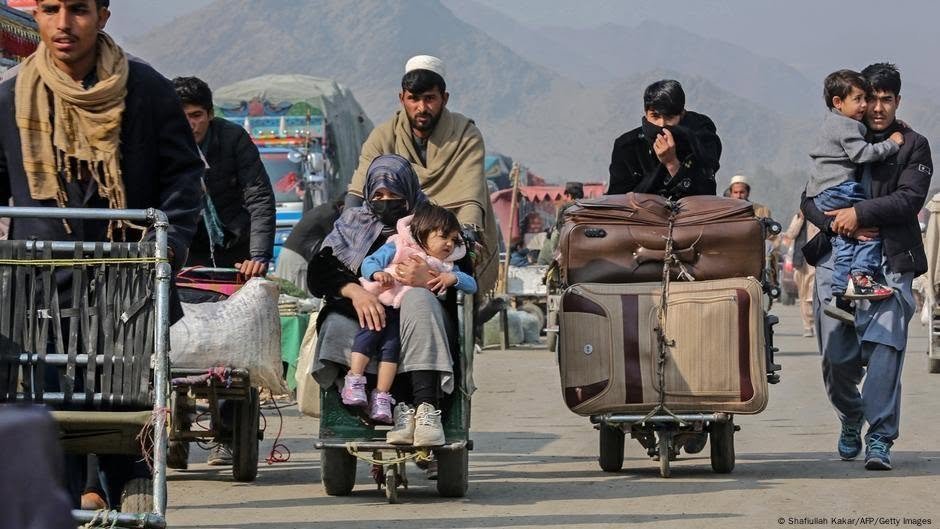
Afghanistan’s ambassador to Pakistan says between 85% and 90% of Afghan migrants have returned to the country from Pakistan so far.
Sardar Ahmad Shakib made the remarks during a meeting on Thursday with Noriko Takagi, the newly appointed head of the UN refugee agency (UNHCR) office in Pakistan.
According to a statement from the Afghan embassy in Islamabad, the meeting focused on the situation of Afghan migrants in Pakistan, their return to Afghanistan, resettlement and reintegration, as well as the role of international organisations in supporting them.
Mr Shakib welcomed the return of Afghan migrants and said the Taliban authorities were prepared to receive and assist those returning, despite limited resources.
He also stressed the importance of coordination between relevant authorities and humanitarian organisations to ensure migrants were treated appropriately and their rights and dignity were respected.
Ms Takagi said she would seek to better understand the challenges facing Afghan migrants in Pakistan and work with relevant stakeholders to identify possible solutions, the embassy statement said.
The return of Afghan migrants has accelerated in recent years amid increased restrictions on undocumented foreigners in Pakistan and government efforts to deport those without valid residency documents.
Thousands of Afghan families have returned across border crossings, raising concerns about access to shelter, healthcare, education, employment and other basic services in Afghanistan.
Data from the UN refugee agency and the International Organization for Migration (IOM) indicate that about 727,000 Afghans had returned from Pakistan by 7 November 2026. The figures include both voluntary returns and deportations.
Humanitarian organisations have repeatedly warned that large-scale returns could place additional pressure on Afghanistan’s already strained economy and humanitarian services, as the country continues to face widespread poverty, unemployment and shortages of basic assistance.