


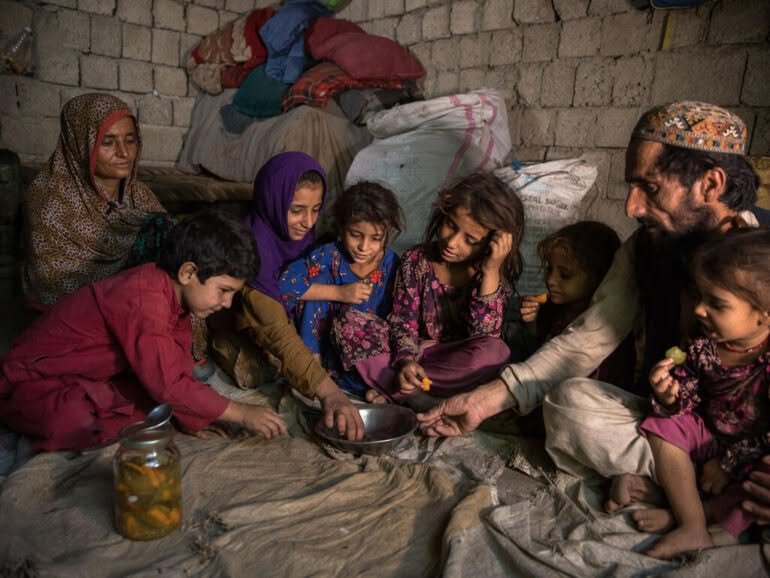
Afghanistan remains one of the poorest countries in the world, with millions of people struggling to meet basic needs, including food, shelter, healthcare, clean water and employment. International reports indicate that despite modest economic growth, living conditions for a large proportion of the population have not improved significantly, as unemployment, declining international aid, drought and economic pressures continue to affect households across the country.
According to a United Nations Development Programme (UNDP) report published in May 2026, about three-quarters of Afghanistan’s population, or nearly 28 million people, were unable to meet their basic needs in 2025. The report says modest economic growth has failed to keep pace with population growth, declining foreign assistance, climate-related challenges and restrictions on women’s rights.
The report estimates that Afghanistan’s economy grew by 1.9% in 2025, while the population expanded at a faster rate. As a result, real income per capita fell by about 2.1%, remaining below its 2020 level. This suggests that economic growth alone has not translated into a meaningful improvement in living standards for many Afghans.
According to assessments by the World Bank and other institutions, about 48% of Afghanistan’s population was living below the poverty line in 2025. Meanwhile, the UNDP estimates that around 75% of the population faced economic insecurity and were unable to meet essential needs. These figures are based on different indicators and methodologies and reflect separate aspects of poverty and economic hardship.
Poverty in Afghanistan extends beyond a lack of income. Millions of people also face deprivation in education, healthcare, nutrition, housing, access to clean water and other essential services. According to the United Nations’ Multidimensional Poverty Index, about 64.9% of Afghanistan’s population was living in multidimensional poverty in 2022 and 2023, while a further 19.9% were considered at risk of falling into poverty. The index measures deprivation across several areas of life, rather than income alone.
Limited employment opportunities, particularly in the formal sector, are among the main factors contributing to poverty. Many households depend on daily wage labour, informal work, borrowing money or selling assets to cover living expenses. In some families, children are also forced to work because of financial hardship, while others are unable to continue their education.
The return of millions of Afghan migrants from neighbouring countries has placed additional pressure on the labour market, public services and already limited household resources. The UNDP says nearly five million Afghans returned to the country between 2023 and 2025, many of whom faced significant economic difficulties. Access to stable employment and essential services remains limited for many returnees, forcing some to rely on daily wage work.
Drought, climate change and declining water resources have also affected livelihoods, particularly in rural areas. Families dependent on agriculture and livestock farming have faced reduced production, crop losses and water shortages. These challenges, combined with rising food prices and living costs, have further weakened household finances.
Declining international humanitarian assistance is another major concern for aid organisations. As humanitarian needs continue to grow, reduced funding has led to cuts in some relief programmes, healthcare services and support for vulnerable families. The United Nations says hundreds of health facilities were closed or had their services reduced in 2025 because of funding shortages.
Restrictions on women’s education and employment have also been identified as factors affecting Afghanistan’s economy. Excluding women and girls from educational and professional opportunities not only affects their individual lives but also reduces household incomes, the country’s productive capacity and prospects for economic development. International organisations have repeatedly said that women’s participation in education and the workforce is essential to reducing poverty and improving living standards.
Despite some signs of economic growth and improvements in certain sectors, experts say Afghanistan needs sustainable job creation, investment in agriculture and industry, stronger public services, expanded education, support for small businesses and improved access to financial resources to reduce poverty.
International assessments suggest that short-term humanitarian assistance alone will not be enough to address poverty in Afghanistan. Long-term efforts to create jobs, increase household incomes, improve infrastructure and strengthen the domestic economy will be necessary. With millions of people still struggling to meet their basic needs, the country’s economic future will depend largely on its ability to create sustainable opportunities and address widespread deprivation.