


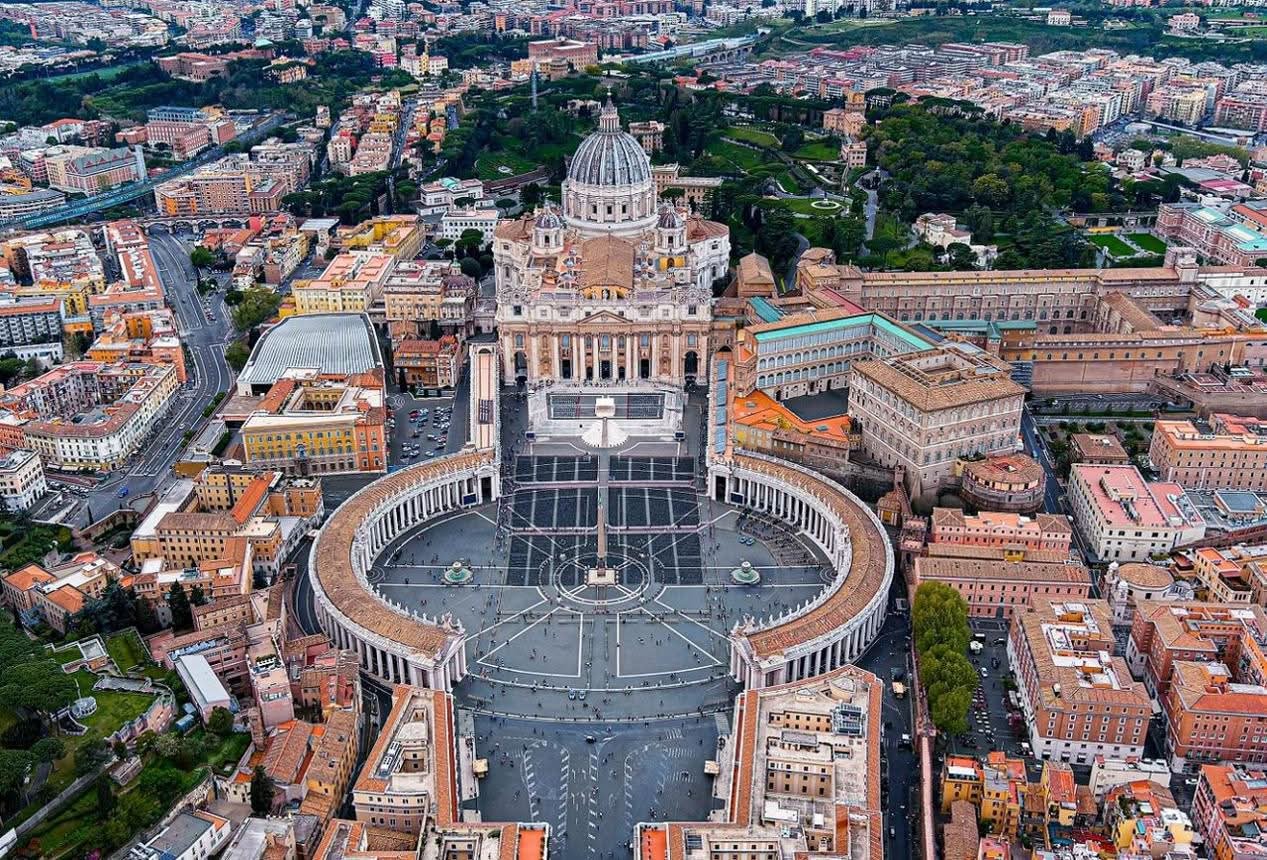
Vatican City is the world’s least populous independent country, with an estimated population of about 506 people, according to 2026 population estimates. It is followed by Tuvalu, Nauru and Palau, among the world’s smallest countries by population.
Vatican City, located within the Italian capital, Rome, is also the world’s smallest sovereign state by area. It is the centre of the Roman Catholic Church and home to the Pope. Most of its residents are associated with the Church, government institutions or related organisations, and citizenship is generally linked to specific official roles and circumstances.
Tuvalu, located in the Pacific Ocean, is the world’s second least populous independent country, with an estimated 9,362 residents. The country consists of several small islands and coral atolls. It is particularly vulnerable to rising sea levels, climate change and natural disasters, while many of its residents depend on fishing, agriculture and small-scale commercial activities.
Nauru, a small island nation in the Pacific, has an estimated population of about 12,100. It is one of the world’s smallest sovereign states and faces challenges related to its limited land area, natural resources and economic opportunities.
Palau, also located in the Pacific, has an estimated population of about 17,614. The country is known for its natural beauty, marine life and tourism industry, which is one of the main sources of economic activity.
In Europe, San Marino, Monaco and Liechtenstein are also among the world’s least populous independent countries. San Marino has an estimated population of 33,605, Monaco about 38,087 and Liechtenstein approximately 40,368. Despite their small populations, the three countries are known for relatively high living standards, strong economies and developed services and commercial sectors.
The Marshall Islands, in the Pacific Ocean, has an estimated population of about 35,075. The country faces significant risks from rising sea levels and climate change. Its economy relies heavily on foreign assistance, fishing and other limited economic activities.
Saint Kitts and Nevis, a Caribbean country made up of two main islands, has an estimated population of about 46,992. Tourism, agriculture and services are important parts of its economy.
Dominica, also located in the Caribbean, has an estimated population of about 65,511. It is known for its mountainous landscape, rainforests, rivers and natural attractions, which contribute to its tourism industry.
Population figures show that having a small population does not necessarily mean a country is economically weak. Some of the world’s least populous nations have high incomes, developed public services and strong economies, while others face significant economic, environmental and geographical challenges.
The ranking is based on independent sovereign states and excludes territories and other small jurisdictions that are not independent countries. Population figures are estimates and may vary depending on the source and methodology used.