


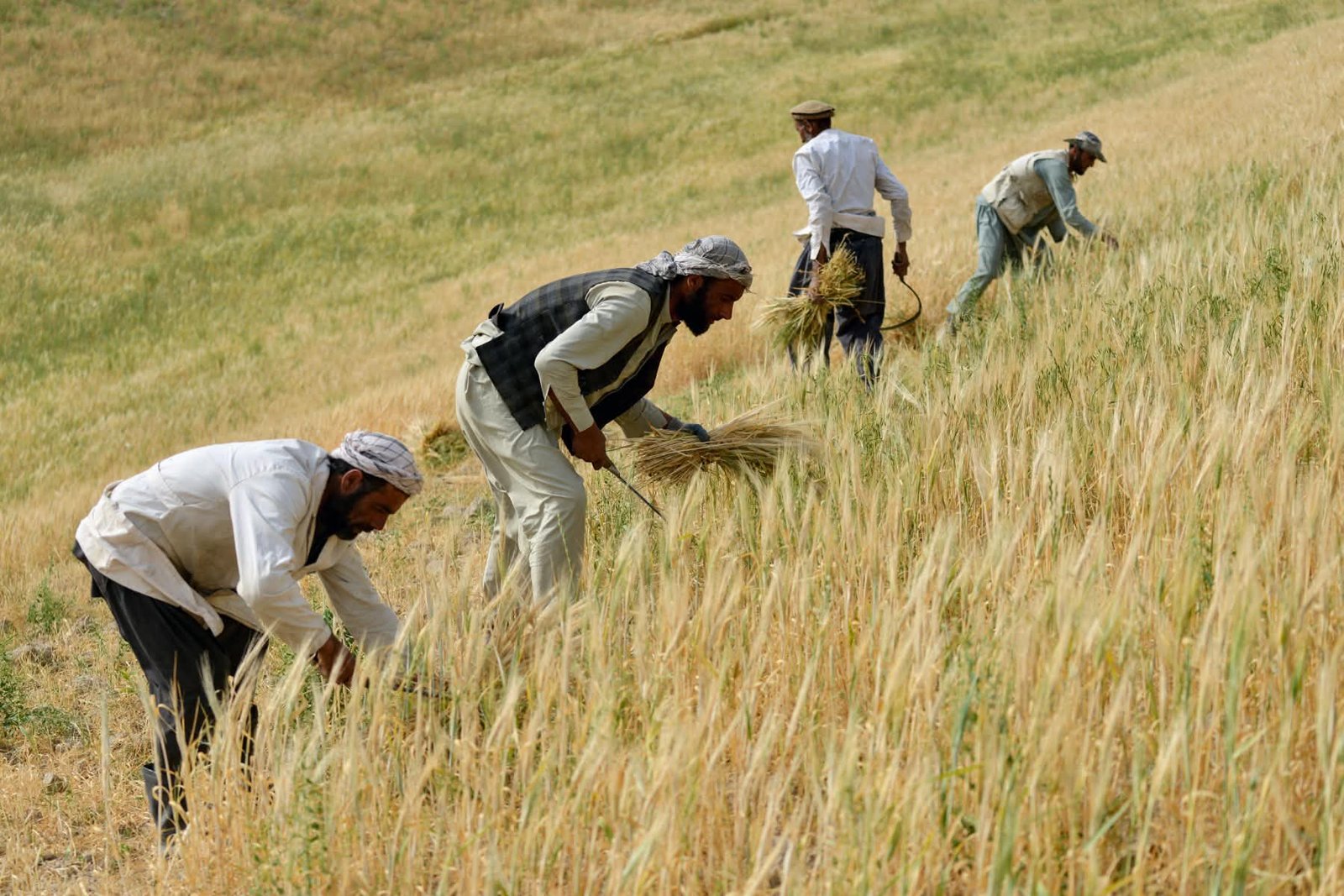
Agriculture remains one of the most important sectors of Afghanistan’s economy and provides livelihoods for millions of people. The country’s fertile valleys, extensive grazing areas, agricultural land and diverse climate allow farmers to produce a wide range of crops.
Wheat is one of Afghanistan’s most important agricultural products and plays a major role in food security. Afghanistan also produces rice, fresh and dried fruits, saffron and various medicinal plants. Grapes, pomegranates, apples, apricots, almonds and raisins are among the products grown in different parts of the country, with some reaching international markets. According to Afghanistan’s investment authorities, more than 70 percent of the population relies directly or indirectly on agriculture for its livelihood.
The sector nevertheless faces major challenges. Water shortages, drought, climate change, land degradation, limited market access and insufficient cold-storage, packaging and irrigation facilities can all reduce agricultural productivity.
Water management is particularly important because agricultural production in many parts of Afghanistan depends heavily on rainfall and snowmelt. The World Bank has noted the importance of snowmelt in supplying water for agriculture. Improving irrigation and water management could therefore have a significant impact on food production and rural incomes.
Developing the entire agricultural value chain—from production and storage to processing, packaging and export—could allow Afghanistan to gain greater economic value from its agricultural products. Dried fruits, saffron and fresh produce are among the areas with export potential.