


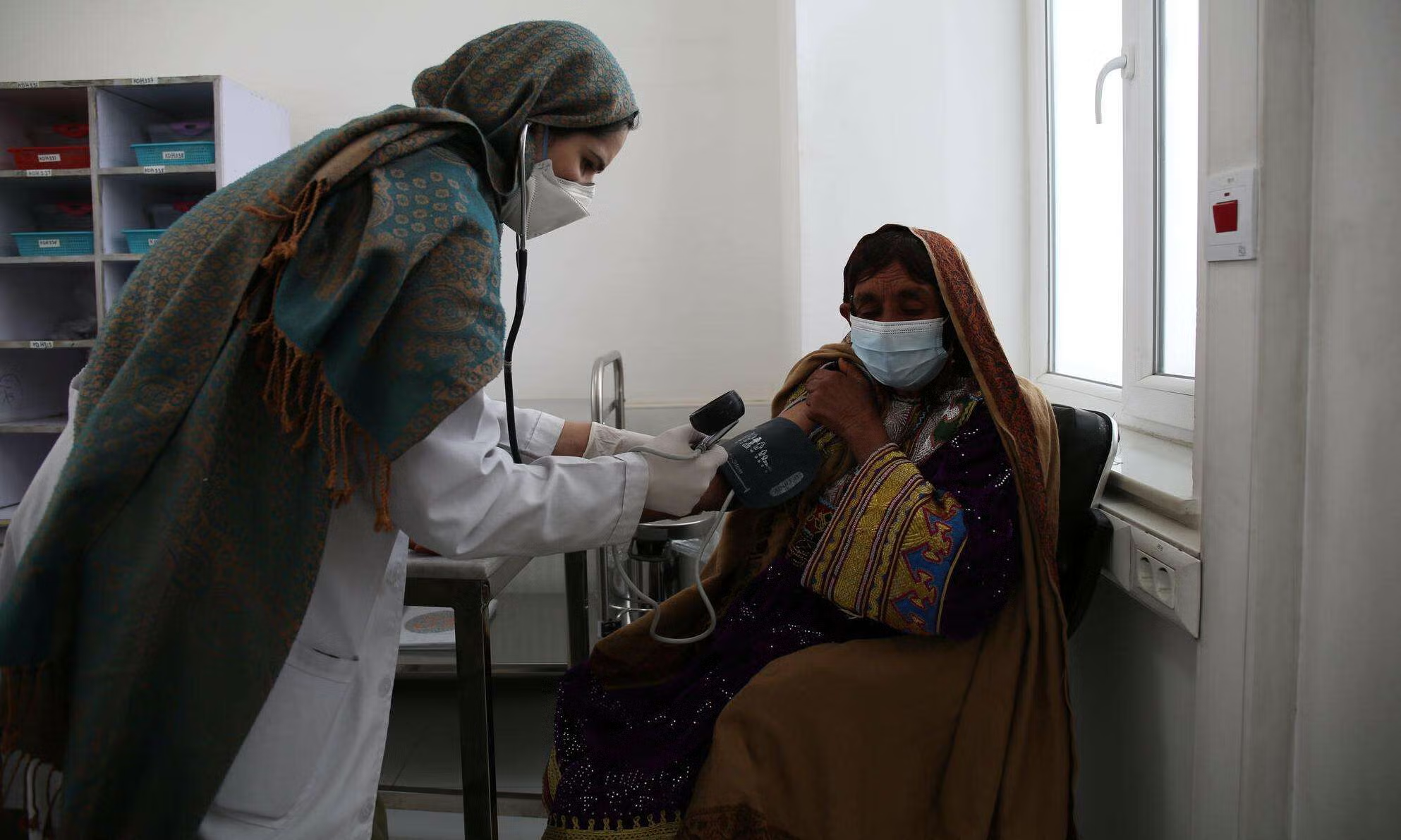
GENEVA: Suraya Dalil, Afghanistan’s former minister of public health, told the United Nations Human Rights Council that the country’s healthcare system cannot remain sustainable without the presence and participation of women. She warned that continued restrictions on women, particularly the ban on medical education will have serious consequences not only for women today but for future generations. According to Dalil, women and girls face growing barriers in accessing healthcare services, while restrictions on female health workers and the prohibition of medical training violate their right to health. “If half of a health system’s potential workforce is excluded, that system cannot survive,” she said. Dalil stressed that Afghanistan’s crisis must remain a priority for international forums and that the voices of Afghan women should be amplified. She argued that any engagement with the Taliban must include clear human rights conditions, especially regarding what she described as “gender apartheid.” The former minister called for people-centered humanitarian aid, support for local communities, and strengthening of civil institutions, while emphasizing accountability for human rights violations. She also urged the immediate operationalization and full funding of the independent investigative mechanism for Afghanistan and called for gender apartheid to be recognized as a crime against humanity.
