

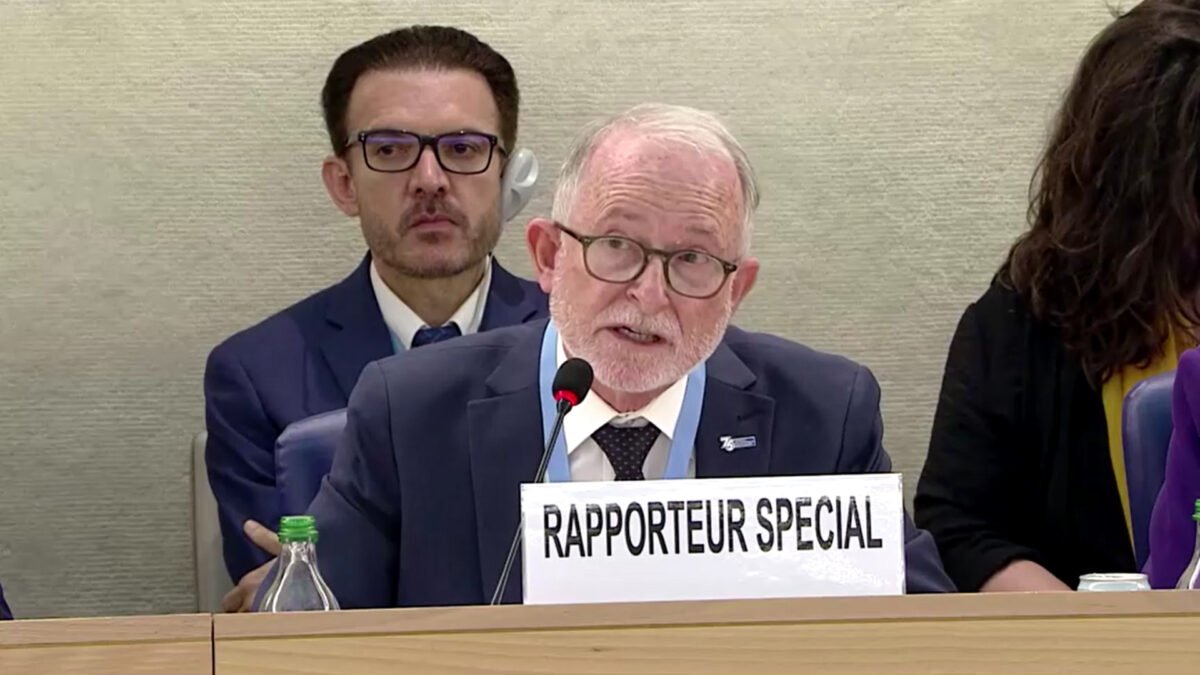
GENEVA: Richard Bennett, the United Nations Special Rapporteur on the situation of human rights in Afghanistan, is set to present a report on the right to health of Afghan women and girls on February 26 at the 61st session of the United Nations Human Rights Council in Geneva. Bennett highlighted in his report that Afghanistan’s healthcare system, already severely weakened by decades of war, has been further undermined by the Taliban’s ban on medical education for women and girls. He said Taliban policies including restrictions on women’s access to medical training, limits on freedom of movement, and requirements for a male guardian to accompany women to clinics or hospitals, have created serious barriers to healthcare access. Bennett also noted a sharp decline in international funding. During the former republic, approximately 75 percent of Afghanistan’s healthcare budget was financed by the international community. Funding cuts have since led to the closure of many health services, including around 400 clinics, and reduced working hours for health professionals, particularly female healthcare workers, doctors, nurses, and midwives. Despite the challenges, Bennett said there are signs of hope. He noted that Afghans, especially women and girls, have remained determined to pursue education, which he described as a positive indicator for the future of human rights in the country. Since returning to power in 2021, the Taliban have barred girls from attending secondary schools and later banned women from universities and medical institutes. The restrictions, particularly on medical education, have raised serious concerns domestically and internationally about the quality of healthcare services and women’s access to their right to health.
- Advertisment -
UN expert to present report on Afghan Women’s and Girls’ Rights to the Human Rights Council
- Advertisement -
