

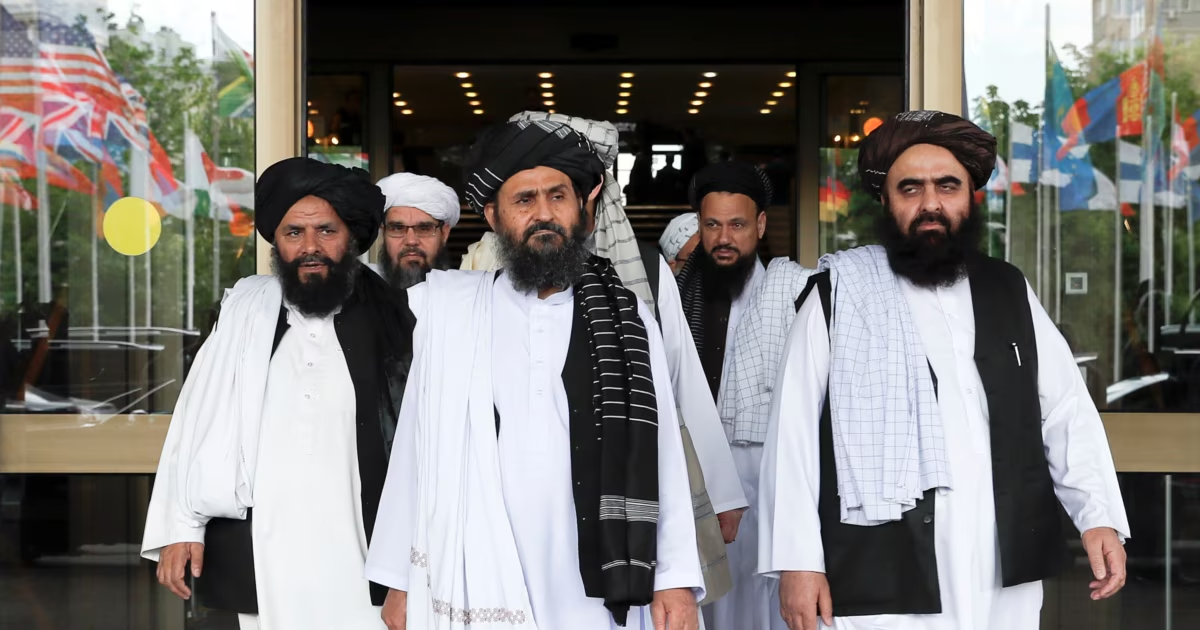
KABUL: A number of political figures from the former Afghan government announced during a virtual meeting on Tuesday that they have formed a new coalition for Afghanistan’s future after extensive negotiations. They assert that this coalition can assist in establishing a democratic and legitimate system. According to a statement from the meeting, the “High Council of Resistance for the Salvation of Afghanistan,” the “National Assembly for Salvation,” and the “National Movement for Peace and Justice” will collaborate as part of this joint coalition. The High Council of Resistance was formed in 2022 in Turkey and includes figures such as Abdul Rashid Dostum, Mohammad Mohaqiq, Atta Mohammad Noor, Salahuddin Rabbani, Abdul Rabb Rasul Sayaf, and Ahmad Massoud. The National Movement for Peace and Justice, led by Hanif Atmar, a former foreign minister residing in Germany, is the latest member of this coalition. These leaders, who held key positions during the administrations of Hamid Karzai and Ashraf Ghani, have previously formed several coalitions that often disintegrated quickly. The experience of these failures has diminished public trust in them, and reactions on social media have generally been negative. At the same time, serious internal disputes within the High Council of Resistance continue. For instance, Salahuddin Rabbani and Atta Mohammad Noor both claim leadership of the Islamic Unity Party, preventing them from attending the same meetings. Ahmad Massoud, although part of the council’s leadership, opposes a purely political approach and emphasizes armed resistance, a viewpoint not reflected in the recent statement. In the National Movement for Peace and Justice, there are also dissenting voices, with some members viewing the joining of this coalition as motivated by personal interests. The roots of this confusion trace back to two decades of republican governance, during which personal disputes undermined political opportunities. Many of these figures are now awaiting foreign intervention. Over the past four years, Taliban opponents have failed both militarily and to achieve unity in the political arena. This fragmentation has allowed the Taliban to strengthen their institutions and highlight the absence of a cohesive opposition force.
- Advertisment -